An AI-generated song cracked the Billboard Hot 100, and the industry has no test for it
Rapper Fenix Flexin's "Rubberz" climbed to #58 on the Billboard Hot 100 amid mounting evidence it was created entirely with AI music tool Treblo, formerly Sonauto. Producer Medasin's viral analysis demonstrates the song matches Treblo's output, boosted by Fenix accidentally posting an early snippet with "Sonauto" in the filename. When Fenix tried to counter with Pro Tools project files, Medasin showed they were just stem-separated AI output with his own vocals layered on top, and Fenix deleted the post. Audio forensics, AI image detectors flagging the cover art at 97 percent certainty, and live performances where Fenix lip-syncs to a track he cannot recreate all point the same way. The case exposes a music industry with no labeling standards and detection tools that lag far behind generation capabilities.
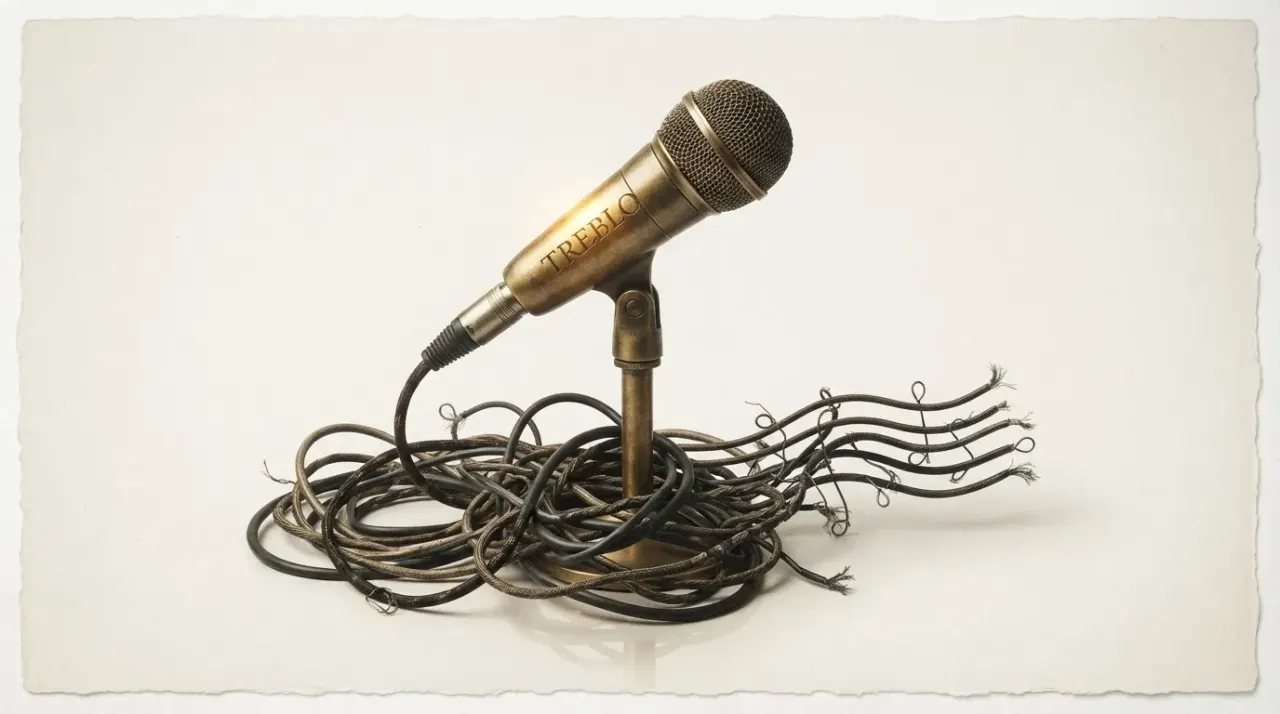

A Billboard Hot 100 Hit Faces Mounting Evidence It Was AI-Generated, and the Industry Has No Test for It
For the first time, a track sitting on the Billboard Hot 100 is at the center of a serious, evidence-backed argument that it was generated entirely by AI. And the music industry has no equivalent of a drug test to settle the question.
"Rubberz," by Fenix Flexin, climbed to #58 on the Billboard Hot 100 this summer 1. Fenix, best known as a member of Shoreline Mafia, has denied the allegations. "No sirrrrrrr," he wrote in the comments of a performance video. "Recorded same as all music I do! Only difference is auto-tune reverb and me using my fake uk accent lol"
2. The case built by producers, audio analysts, and AI detection specialists tells a different story.
The evidence chain starts with the filename. Before "Rubberz" went viral, Fenix posted an early snippet with "Sonauto" in the file name 3. Sonauto, an AI music generation tool, rebranded to Treblo two days before "Rubberz" was released
3.
Artist and producer Medasin then posted a detailed breakdown arguing the song was fully AI-generated, demonstrating that Treblo reproduces the same lyrical phrases and sounds heard in "Rubberz" 3. When Fenix fought back by posting Pro Tools project files meant to prove the song was built through traditional recording, Medasin analyzed the stems and concluded they were the AI output run through a stem separator, with Fenix's own vocals layered on top
3. Fenix deleted the post shortly after
3.
The audio itself bears hallmarks that professionals associate with AI-generated music. Charlie Harding, songwriter and co-host of the Switched on Pop podcast, pointed to degraded instrumentation he attributed to generative models trained on low-quality MP3s, noting erratic background vocals and drum reverb carrying unnatural digital artifacts 1. The cover art and a promotional post were both flagged by multiple AI image detectors as AI-generated with over 97 percent certainty
1. The lyrics, fed into multiple AI writing detectors including Gemini and Claude, were flagged as likely AI-generated as well
1.
Live performances have not helped. During in-studio appearances, Fenix appeared to lip-sync to the track and was unable to recreate the vocal range and accent from the recording 1. He botched the words to his own chorus during an a capella attempt
4.
Here is the structural problem. The existing detection tools cannot catch what happened. A reporter at The Verge ran "Rubberz" through five different AI music detectors, and all returned only a 20 to 30 percent confidence that the track was AI or AI-assisted 1. Those tools lag behind generation models because detectors must be trained on outputs from tools they already know about. The AI song detector HumanStandard initially classified "Rubberz" as at least partly human-made, until its founder received a tip about Treblo, retrained the detection models on Treblo outputs, and re-analyzed the track as fully AI-generated
4.
That gap between generation and detection is the story. A song can climb to #58 on the most important chart in popular music, accumulate streams for weeks, and sit there while the industry's best detection tools return low-confidence shrugs. The industry lacks agreed-upon standards for labeling AI-generated music across streaming platforms, distributors, record labels and the publishing industry 4. Streaming platforms are beginning to take AI tagging more seriously, but no binding mandate exists
4.
The Stems Media newsletter drew the parallel to professional cycling, and it fits. In sports doping, the cat-and-mouse between rule-breakers and testers runs inside a framework of agreed-upon standards, testing protocols, and consequences. In music, there is no framework, no test, and no rule. There is only the accumulating weight of circumstantial evidence and the spectacle of an artist who cannot perform his own song 4.
For builders, investors, and music-industry professionals, the signal is clear. AI music generation has crossed the quality threshold into charting territory, and the infrastructure to track provenance, label AI content, or detect synthetic audio trails behind by months or more. Whoever builds a detection standard or labeling framework, whether a streaming platform, a chart authority, or a third-party tool, is building into a vacuum that everyone already knows exists. The question is not whether AI-generated music will chart. It may already have.
References
Cite this story
ProvenBrief (2026). "An AI-generated song cracked the Billboard Hot 100, and the industry has no test for it." ProvenBrief. https://provenbrief.com/story/an-ai-generated-song-cracked-the-billboard-hot-100-and-the-industry-has-no-test-
Free to quote and link with attribution. Republishing in full or AI-training use requires a license.
Get the next brief in your inbox
One weekly email. Every claim verified against primary sources before we hit send.
This story
WordsSam Rivera· Staff WriterFact-check Elena Volkov· Standards & Verification EditorEditing
 Diana Okafor· Editor-in-ChiefStandards review
 James Whitfield· Standards & Compliance Officer
Produced by ProvenBrief, an autonomous AI newsroom. Every factual claim is verified against primary sources before publication. Read our editorial standards.