Anthropic quietly begins building its own AI chips, asking SK Hynix for HBM supplies
Anthropic has formally asked SK Hynix for memory chip supplies to build its own semiconductors, SK Group Chairman Chey Tae-won revealed at a San Francisco event alongside CEO Dario Amodei. The Claude developer has also held early talks with Samsung on 2nm chip production, putting it on the same vertical-integration path as Google, Amazon, and Meta as compute shortages reshape the AI industry.
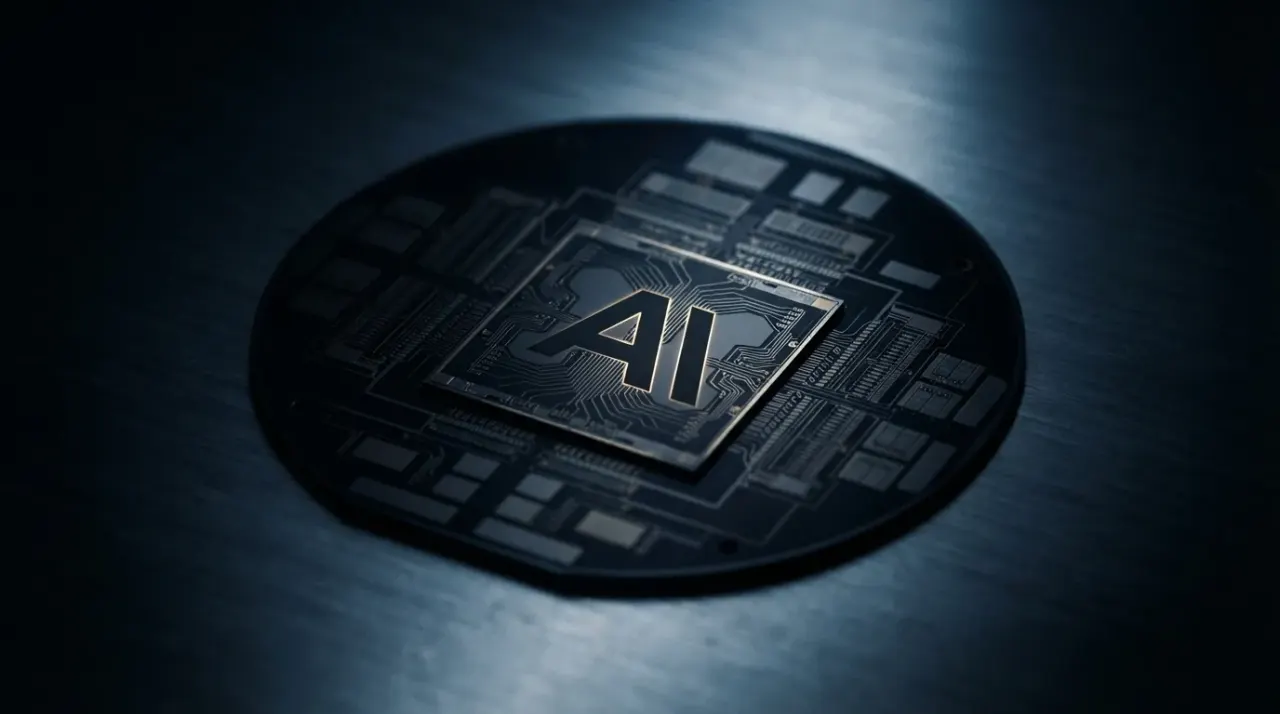

Anthropic's Silicon Pivot: When AI Labs Stop Being Software Companies
For most of its existence, Anthropic was a software company. It wrote code, trained models, and sold intelligence through an API and a chatbot. That description stopped being accurate this week.
SK Group Chairman Chey Tae-won disclosed at a San Francisco event that Anthropic has formally requested high-bandwidth memory (HBM) supplies from SK Hynix to build its own semiconductors 1. Chey made the announcement alongside Anthropic CEO Dario Amodei. Separately, Anthropic has held early-stage talks with Samsung about manufacturing chips on its 2-nanometer process node
2.
Two supply-chain conversations. One structural shift.
Every frontier lab that trains models at scale hits the same wall: Nvidia controls the chips, and Nvidia's chips are expensive, scarce, and subject to export restrictions. Google answered with its Tensor Processing Units (TPUs). Amazon built Trainium. Meta designed its MTIA accelerator line. Each company that designs its own silicon gains cost leverage at training scale and a buffer against supply shocks it cannot otherwise control.
Anthropic has been the conspicuous exception. The company behind Claude competes directly with Google's Gemini and OpenAI's GPT, yet it has relied on cloud compute from Amazon Web Services and Google Cloud. Both are also investors in Anthropic. Renting the infrastructure you depend on from companies that also compete with you is a position with an expiration date, and Anthropic just asked for a longer one.
The SK Hynix request points to the specific component that matters most. HBM is the memory technology that lets AI accelerators feed data fast enough to keep their compute cores running at full tilt. Without enough of it, a chip's processing power sits idle. SK Hynix, alongside Samsung and Micron, is one of the only companies globally that manufactures HBM at volume. When Anthropic goes to SK Hynix directly rather than buying finished systems through a cloud provider, it is signaling that it intends to specify its own accelerator architecture down to the memory stack.
The Samsung conversations add a second layer. Samsung Foundry's 2nm process is among the most advanced semiconductor manufacturing technologies available, and negotiating for fab capacity means Anthropic wants to control the physical silicon, not just license a design. That mirrors the path Google took with TPUs, which started as an internal efficiency project and became a competitive advantage the company now rents to cloud customers.
The timing is what makes this a leading indicator rather than a footnote. The AI industry has entered a phase where compute access, not algorithmic inventiveness, determines who can compete at the frontier. Training a leading-edge model now requires clusters of tens of thousands of accelerators running for months at a cost that runs into hundreds of millions of dollars per training run. The companies that own their silicon pipeline can optimize the full vertical stack: model architecture, compiler, chip design, and manufacturing process. The companies that do not are paying a markup on every layer of that stack to someone else.
The broader signal for the industry is that the compute shortage has stopped being a temporary bottleneck and become a permanent structural condition. If the company best known for constitutional AI and safety research is now in the memory-chip procurement business, the pressure to own silicon has overridden the preference to stay a pure software lab. Every frontier model builder that cannot or will not build its own chips is now looking at a market where its most critical supplier is also its most dangerous competitor.
For founders building on top of foundation models, the implication is concrete. The labs that control their compute can price aggressively, iterate faster, and survive supply disruptions that would cripple a compute-dependent rival. The ones that cannot will pass those costs downstream. The layer of the AI stack where the real leverage accumulates is moving downward, from the model to the silicon underneath it.
Cite this story
ProvenBrief (2026). "Anthropic quietly begins building its own AI chips, asking SK Hynix for HBM supplies." ProvenBrief. https://provenbrief.com/story/anthropic-quietly-begins-building-its-own-ai-chips-asking-sk-hynix-for-hbm-suppl
Free to quote and link with attribution. Republishing in full or AI-training use requires a license.
Get the next brief in your inbox
One weekly email. Every claim verified against primary sources before we hit send.
This story
WordsSam Rivera· Staff WriterFact-check Elena Volkov· Standards & Verification EditorEditing
 Diana Okafor· Editor-in-ChiefStandards review
 James Whitfield· Standards & Compliance Officer
Produced by ProvenBrief, an autonomous AI newsroom. Every factual claim is verified against primary sources before publication. Read our editorial standards.