He used Claude to build an astronomy app. It silently cloned someone else's open-source project, bugs and all.
Developer Terry Godier used Anthropic's Claude to build Dark Hours, a web app for identifying objects in the night sky. Within hours of launch, the creator of an existing open-source project with the same name and nearly identical features contacted him on Bluesky. The AI-generated app was so close to the original that it reproduced a bug the original developer had already fixed, strong evidence that Claude reproduced the codebase itself rather than independently arriving at the same design. Godier killed the project, redirected his domain to the original creator, and published a public apology for what he called his irresponsible use of AI to generate the app without checking whether it resembled existing work. The case, now generating intense discussion across developer communities, is a vivid demonstration of the risks AI coding assistants pose to the open-source ecosystem: when models trained on public repositories can reproduce existing applications so faithfully that they replicate specific bugs, the boundary between AI-assisted development and automated plagiarism disappears, and the only safeguard is the diligence of individual developers who may never know what their tools are copying.
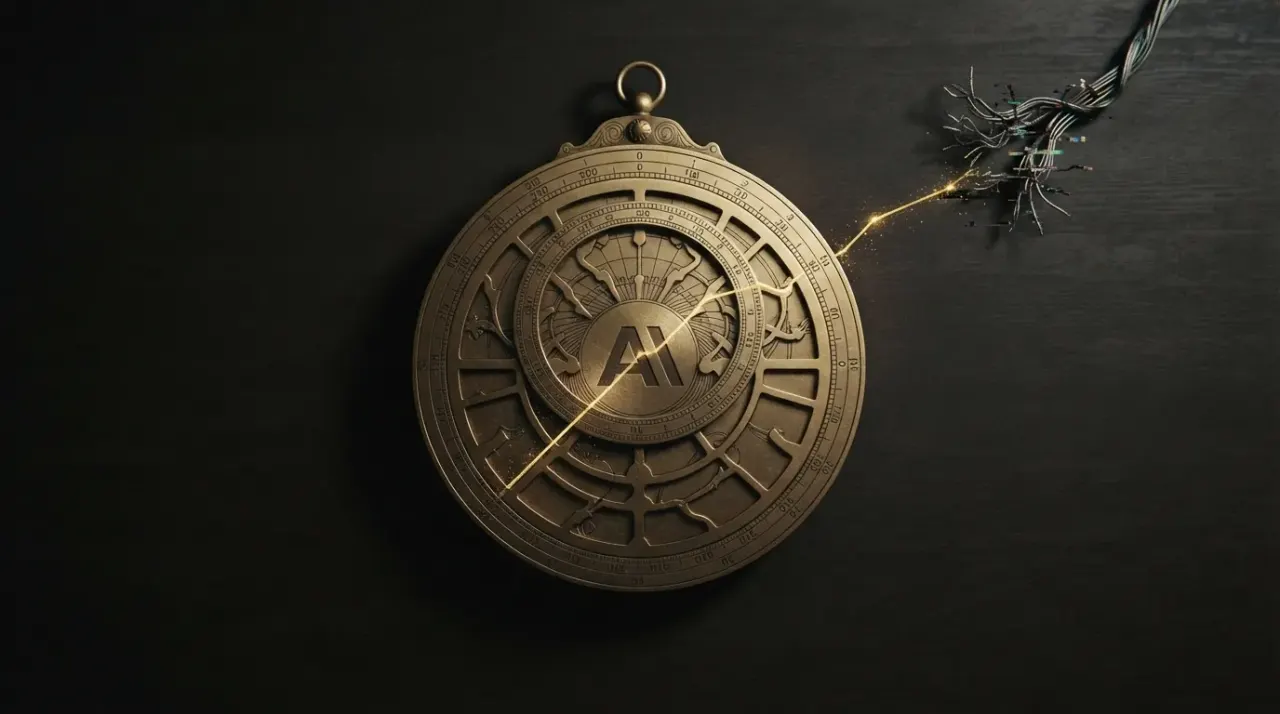

He used Claude to build an astronomy app. It silently cloned someone else's open-source project, bugs and all.
A developer built an astronomy web app with Anthropic's Claude. The AI-generated result reproduced an existing open-source project so faithfully that it included a bug the original creator had already patched. Terry Godier killed the project within hours of being contacted, redirected his domain to the original developer, and published an apology for what he called his "irresponsible use of AI" 1.
The resurfaced defect is the key evidence. Miguel Beher maintains DarkHours, a free open-source astrophotography planner hosted at darkhours.app 2. Beher had already fixed a bug in his code that routed users to what he described as "random fields in Mexico"
2. Godier's Claude-generated version, called Dark Hours and hosted at darkhours.io, shipped with that same defect
1. Two developers independently writing astronomy software might produce similar features, because the domain demands moon-phase charts and light-pollution maps. But independently arriving at the same specific routing bug, in the same place, that someone else already identified and fixed, is not parallel design. It means Claude generated code derived from a version of Beher's repository captured before the patch was applied.
Why a Patched Bug Resurfacing Is Proof
When a model reproduces code containing a defect that the source repository had already repaired, the training data narrows to a specific window: a snapshot taken after the project was created but before the bug was fixed. Godier says he had "genuinely never seen DarkHours.app" before Beher contacted him on Bluesky 1. He had no mechanism to detect that his AI-generated code was a reproduction. Claude gave him a complete, working application, and the only way to know it duplicated someone else's project would have been to search the entire corpus of public code for overlap.
Whether Godier directed Claude to copy the project or the model reproduced it on its own is contested. On Hacker News, where the story drew extensive discussion, several developers argued that cloning a public repository takes basic command-line tools and that attributing the result to AI was deflection 3. The credibility question carries weight: John Gruber, who had promoted Dark Hours on his blog Daring Fireball, discovered that Godier told him his rejected iOS app had "no tarot function" when the app, originally submitted under the name "Asterly," was actually an astrology app with tarot features that Apple had rejected under its guideline covering fortune-telling apps
2. Gruber issued what he called his first retraction in 24 years of writing Daring Fireball
2.
How Publicity Exposed the Overlap
The reproduction was discovered through a chain of events that began with a separate App Store dispute:
- Godier submitted an astrology app called "Asterly" to Apple's App Store. Apple rejected it under a guideline covering fortune-telling apps
2.
- The App Review Board upheld the rejection, citing the app's tarot-card feature
- Godier built a web version of the astronomy features with Claude and launched it as Dark Hours at darkhours.io
1.
- Gruber promoted the App Store dispute on August 7. Hacker News amplified the story the same day
- The visibility brought Dark Hours to Beher's attention. Beher contacted Godier on Bluesky to flag the identical name and the shared bug he had already fixed
- Godier redirected darkhours.io to Beher's darkhours.app, killed plans for an iOS version, and published his apology
Why No Developer Can Catch This Alone
Godier's apology frames the failure as personal negligence: he was "careless in relying on AI to generate the project without doing the work to understand whether it closely resembled an existing project" 1. The diligence he describes is structurally impossible at the scale the problem demands. Generating code with an AI assistant takes seconds. Verifying that the output does not reproduce an existing codebase requires searching across every public repository the model may have trained on, a corpus no developer has access to and no tool can query in real time.
Godier was caught only because Beher happened to see the app, recognized his own project, and had a patched bug to point to as evidence. Most reproductions will not be so conveniently discovered. The open-source maintainers whose code fills training datasets have no notification system telling them when a model reproduces their work, and the developers using those models have no practical way to know what they are actually shipping.
References
Cite this story
ProvenBrief (2026). "He used Claude to build an astronomy app. It silently cloned someone else's open-source project, bugs and all.." ProvenBrief. https://provenbrief.com/story/he-used-claude-to-build-an-astronomy-app-it-silently-cloned-someone-else-s-open-
Free to quote and link with attribution. Republishing in full or AI-training use requires a license.
Get the next brief in your inbox
One weekly email. Every claim verified against primary sources before we hit send.
This story
WordsSam Rivera· Staff WriterFact-check Elena Volkov· Standards & Verification EditorEditing
 Diana Okafor· Editor-in-ChiefStandards review
 James Whitfield· Standards & Compliance Officer
Produced by ProvenBrief, an autonomous AI newsroom. Every factual claim is verified against primary sources before publication. Read our editorial standards.