AI Accountability
05 pagesAI Accountability pricing, plans and usage limits, with the billing terms and alternatives that matter before you pay. Every figure is sourced and re-checked against primary sources.
Turn the price into a decisionCompare this plan with another tool using your seats, bill and time value. Free calculator, no signup →01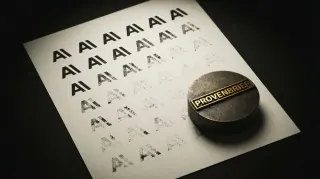
The AI Provenance Compliance Tracker: Which AI Providers Actually Mark AI-Generated Content, Modality by Modality
Two weeks into EU AI Act Article 50 enforcement, machine-readable marks are becoming standard on AI images and video at the major providers, but text - the modality behind AI answers, spam and fraud - is marked at only two of them, and the newest text watermark, Anthropic's, was stripped by an open-source tool within four hours of launch.
02
The Open-Washing Rate: We Test Every Major "Open" AI Model's License Against the OSI Definition Nobody Applies
The only per-model assessment of AI models against the Open Source AI Definition is frozen in October 2024: the OSI validated a handful of systems once (Pythia, OLMo, Amber, CrystalCoder and T5 passed; Llama 2, Grok, Phi-2 and Mixtral failed), then stated it "will not validate or review individual AI systems", ever. Since then, hundreds of models have shipped marketed as "open," from Llama 4 to Qwen3.8 to DeepSeek to Gemma, and not one has been publicly assessed against the standard, even as ZDNET and law firms like Hunton still cite the 2024 list as current guidance. This is the living tracker that vacancy demands: every major "open" model's legal terms, tested restriction-by-restriction, usage caps, acceptance-policy incorporation, revenue/MAU thresholds, naming requirements, field-of-use bans, missing training-code and data-information disclosure, against OSAID 1.0's published criteria, summarized in one named metric: the Open-Washing Rate, the share of each publisher's "open"-marketed models that legally fail the definition.
03
The AI Climate Pledge Gap: We Tracked Every Major AI Company Building Gas Plants While Promising Net Zero
AI companies have pledged net-zero emissions by 2030-2040, but our living tracker shows they are simultaneously building off-grid natural gas plants permitted to emit hundreds of millions of tons of CO2 annually. Compiling air permit data for every known behind-the-meter gas project linked to Amazon, Google, Meta, Microsoft, OpenAI, xAI, Oracle, and others, the tracker maps each company's climate pledge and actual emissions trajectory against their new fossil fuel commitments, revealing that permitted CO2 from just the known projects exceeds the annual emissions of entire nations.
04
The AI Safety Pledge Scorecard: Tracking Every Voluntary Commitment and Who Actually Kept It
Of the voluntary AI safety commitments made by 16 leading AI companies under the July 2023 White House framework and the May 2024 Seoul Summit, fewer than half are fully honored as of mid-2026, and compliance is declining, not improving. We built a living, company-by-company compliance matrix scoring each signatory against every pledge they made (red-teaming, watermarking, safety incident reporting, model transparency, third-party auditing), with dated entries tracking when commitments were weakened, reinterpreted, or quietly abandoned.
05
The Provenance Trap: Why Every System for Proving Content Was Human-Made Is Failing
Every attempt to answer 'was this made by a human?', AI text detectors, image watermarks, legal definitions of 'human-made,' platform moderation, academic integrity software, relies on finding traces of machine generation that are converging toward invisibility. This piece explains why post-hoc detection is structurally doomed and what would actually work instead.