A $5 billion stealth startup is trying to reinvent chip manufacturing. Its biggest backer just nearly collapsed.
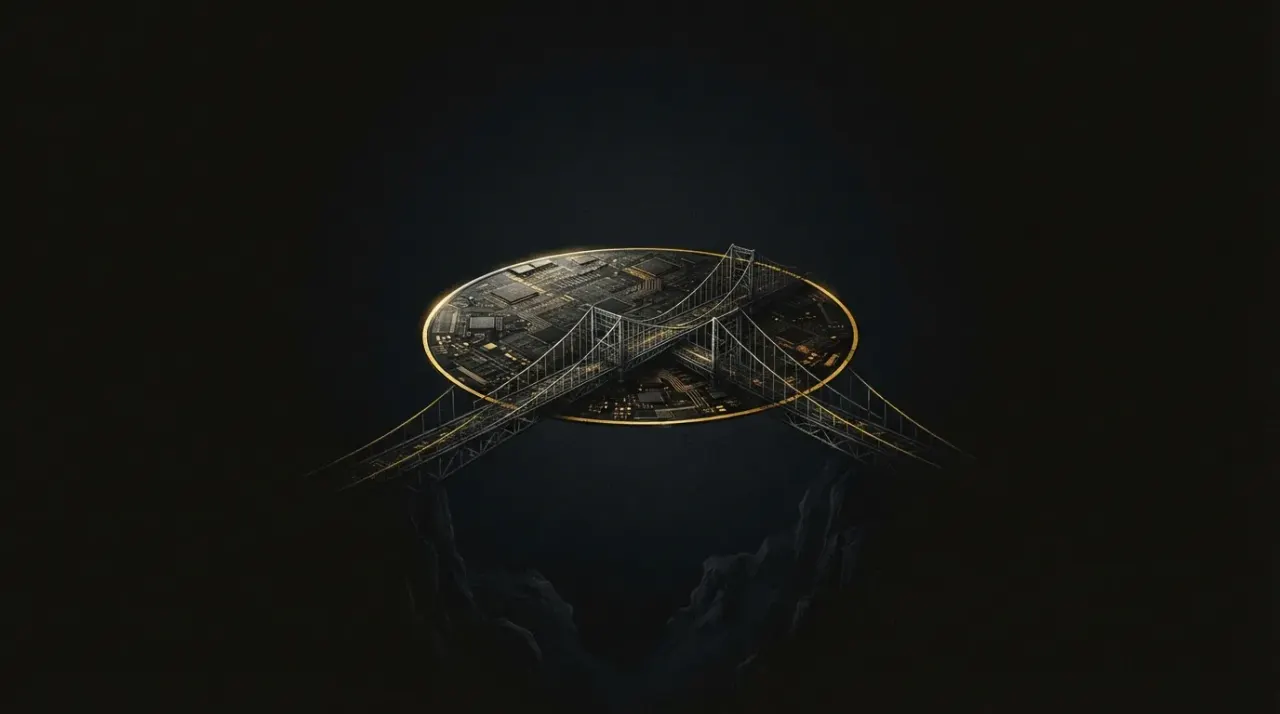
Source Foundry, a secretive startup founded by Stanford researchers and valued at $5 billion, is building equipment designed to break bottlenecks in advanced semiconductor manufacturing. This week it received a $400 million investment from Leopold Aschenbrenner's hedge fund Situational Awareness, bringing the fund's total commitment to $500 million. The bet came just days after the fund narrowly avoided collapse, selling off the majority of its public portfolio to Citadel as assets under management fell from $20 billion to $10 billion. That a near-collapsed AI hedge fund chose to double down on chip manufacturing equipment, not model labs, signals where Aschenbrenner believes the real bottleneck in AI compute lies: not in who trains the best model, but in who controls the tools that make the chips.

Situational Awareness committed another $400 million to Source Foundry this week, bringing the hedge fund's total stake in the stealth chip-equipment startup to $500 million 1. The investment landed days after the fund sold the majority of its public stock portfolio to Citadel following a 67% loss in July, with assets falling from a peak near $45 billion to roughly $10 billion
2. Mike Novogratz of Galaxy Digital described the unwind as the most catastrophic hedge fund collapse he had witnessed
3.
Source Foundry was incorporated in California in July 2025 by Stanford researchers Abdulmalik Obaid and Joe Burg, and is backed by Sequoia Capital 2. At a $5 billion valuation, the company is still in stealth and has no shipping product
2. Its pitch: redesign lithography tooling, the equipment that prints circuit patterns onto silicon wafers, to challenge ASML's hold on the machines that manufacture every cutting-edge AI chip
3.
What $500 million means against a $10 billion fund
Situational Awareness's $500 million total commitment to Source Foundry now equals roughly 5% of its remaining $10 billion in assets. At the fund's summer peak near $45 billion, the same investment would have been just over 1%. The collapse did not change the thesis. It concentrated it, by melting the denominator.
That 5% sits in a company with no shipping product. The Wall Street Journal, which first reported the deal, did not specify which manufacturing step Source Foundry is targeting, whether any foundry customer has engaged, or whether this week's $400 million was new primary funding or a secondary purchase from an existing shareholder 2. Sequoia partner Stephanie Zhan has said the company targets a bottleneck in semiconductor manufacturing by developing lithography tools
3.
The fund's July collapse followed margin calls from prime brokers Bank of America, Goldman Sachs, and JPMorgan on positions leveraged up to 400% in AI hardware companies including SK Hynix, Nebius, and Micron 2. Through the fire sale, the fund held onto its private Anthropic stake
1. TechCrunch reported the asset decline as $20 billion to $10 billion
1, while AI Weekly, citing Bloomberg, placed the pre-crash peak at $45 billion
2. The gap likely reflects different measurement points during a fast-moving unwind.
The chokepoint no fab subsidy fixes
Source Foundry's target is ASML, the Dutch company that holds 100% of the market for extreme ultraviolet (EUV) lithography machines and roughly 90% of the broader lithography equipment market 4. No other company on Earth makes EUV systems.
The supply is narrow:
- ASML shipped approximately 380 lithography systems in 2024, of which about 40 were EUV machines 5
Even a fully funded fabrication plant requires ASML machines to function, and ASML alone manufactures them. The constraint is not the factory floor. It is the printer inside it.
ASML's monopoly took three decades to build, relying on components from over 800 suppliers including optics from Germany's Zeiss that alone took 15 years to develop 5. China has reportedly invested tens of billions trying to develop domestic EUV capability and remains at least a decade behind
5.
The bet on the equipment layer
Aschenbrenner's public bets on AI hardware companies (SK Hynix, Micron, Nebius) were leveraged wagers on demand for chips. They collapsed when AI infrastructure stocks sold off 2. His private bet on Source Foundry is a wager on the supply of the tools that make chips. That is a different layer of the stack, and the layer where zero competition currently exists.
The AI supply chain has three tiers with radically different competitive structures. Models are software that many labs can train. Fabrication plants are physical infrastructure that governments across the United States, Europe, and Asia are subsidizing. Lithography equipment is a single point of failure controlled by one company on one continent, built over thirty years with components from 800 suppliers. Aschenbrenner, who had no trading experience when he launched Situational Awareness in 2024 at age 24 1, is putting 5% of what remains of his fund into a one-year-old startup trying to crack the monopoly that governments, national labs, and entire industrial policies have not broken.
If Source Foundry can produce an alternative to even one step in ASML's process, it attacks the one layer of the AI supply chain where no competitor exists.
References
Cite this story
ProvenBrief (2026). "A $5 billion stealth startup is trying to reinvent chip manufacturing. Its biggest backer just nearly collapsed.." ProvenBrief. https://provenbrief.com/story/a-5-billion-stealth-startup-is-trying-to-reinvent-chip-manufacturing-its-biggest
Free to quote and link with attribution. Republishing in full or AI-training use requires a license.
Get the next brief in your inbox
One weekly email. Every claim verified against primary sources before we hit send.
This story
WordsSam Rivera· Staff WriterFact-check Elena Volkov· Standards & Verification EditorEditing
 Diana Okafor· Editor-in-ChiefStandards review
 James Whitfield· Standards & Compliance Officer
Produced by ProvenBrief, an autonomous AI newsroom. Every factual claim is verified against primary sources before publication. Read our editorial standards.