Bruce Schneier's sharp reframe: writing is a gym task, not a work task
Security thinker Bruce Schneier is reframing the debate over AI and writing with a distinction that cuts through the usual productivity arguments: writing assignments are gym tasks, not work tasks. Students write policy memos not because the world needs more memos, but because the act of drafting, arguing, and revising builds critical thinking skills that atrophy without constant exercise, and employers are already noticing the decline. The framing challenges a core assumption of the AI productivity movement: that if a tool can produce the output, the human effort was always just waste.
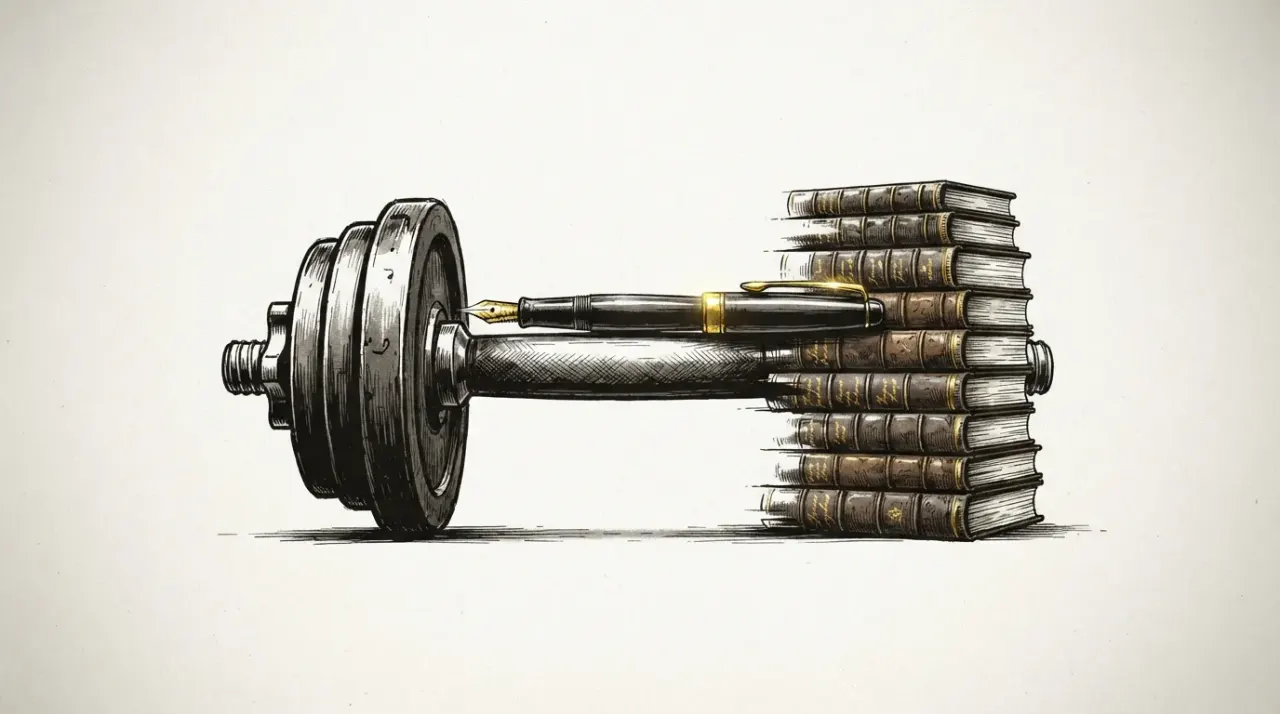

Bruce Schneier's Sharp Reframe: Writing Is a Gym Task, Not a Work Task
Bruce Schneier teaches public policy at the Harvard Kennedy School and the Munk School at the University of Toronto. His students regularly use AI to write their assignments. His response isn't to ban the tools. It's to ask a question that cuts through the productivity debate: is the task you're delegating more like work, or more like going to the gym?
At work, if you need to move heavy objects across a room, you should use every tool available. But at the gym, having a robot lift the weights for you defeats the purpose. The point of weightlifting isn't to move heavy things. It's the lifting itself.
Schneier applies this to writing. He doesn't assign policy memos because the world needs more policy memos. He assigns them because the act of drafting, arguing, and revising builds critical thinking skills that atrophy without constant exercise. Employers, he says, are already noticing the decline 1.
Why the Output Was Never the Point
The pitch for AI writing tools rests on a core assumption: if a tool can produce the output, the human effort behind it was waste. A memo generated in seconds beats one that took hours. From the output perspective, the human was always the bottleneck.
Schneier's frame breaks that logic. For a whole class of tasks, the output is a byproduct. The real product is the cognitive workout the human gets from producing it. When you outsource the writing, you keep the document but lose the thinking that writing it would have forced you to do.
The implications go beyond classrooms. If the ability to construct an argument, test an idea, and figure out what you actually believe are byproducts of writing, what happens to a workforce that gradually stops writing? The skills don't vanish overnight. They erode the way muscle does when you stop training, slowly enough that you don't notice until you need them and find they're gone.
Where the Line Actually Falls
Schneier draws a practical boundary. When someone hires a writer for an instruction manual, a sales deck, or a legal disclosure, they need "dry, predictable, accurate writing" 1. That's a work task, and AI handles it well. But when writing is where the thinking happens, when building a strategy or working through complexity is the point, delegating it costs you the capability the task was building.
For managers, the diagnostic is straightforward. Not every task that produces text is a writing task. Some are thinking tasks wearing a writing costume. The question to ask before delegating isn't whether AI can handle it, but what the task builds in the person who does it.
For people building AI tools, the frame is a design challenge. The most useful tools will be the ones that distinguish between a task where speed is the goal and a task where the struggle is the feature. An AI that drafts your argument for you might be the equivalent of a robot doing your bench press: the bar moves, but you get nothing from it.
The creative economy gets a reframe too. For most of history, Schneier notes, we needed human writers for both kinds of tasks 1. Now we can separate them. AI absorbs the work-type writing, which could free human capacity for the kind of writing where process matters. But it also means fewer paid roles for people whose careers depended on doing both.
The Incentive Problem
Schneier is honest about the gap between understanding the problem and solving it. He gives students the work-versus-gym speech every class. They still use AI. Assignments are hard, everyone is overworked, and students feel they'll look bad if their peers are using AI and they aren't 1.
The parallel to physical fitness is exact, and it explains why this is harder than knowing the answer. No one pays you to go to the gym. The benefits are real but slow: fewer aches, better mood, more stamina. They accrue so gradually that they're easy to miss until they're gone. Cognitive exercise works the same way. The payoff from writing your own analysis is incremental and invisible in the moment, while the shortcut is always available and frictionless.
This is the structural challenge for any organization trying to preserve thinking skills. It isn't enough to tell people that struggling through a first draft makes them sharper. The reward is delayed, the alternative is effortless, and peer pressure pushes toward delegation. Schneier's essay, first published in The Guardian on July 24 and flagged by Simon Willison on July 30 2, gives the diagnostic. Separate work tasks from gym tasks. Protect the ones where the process is the point.
References
Cite this story
ProvenBrief (2026). "Bruce Schneier's sharp reframe: writing is a gym task, not a work task." ProvenBrief. https://provenbrief.com/story/bruce-schneier-s-sharp-reframe-writing-is-a-gym-task-not-a-work-task
Free to quote and link with attribution. Republishing in full or AI-training use requires a license.
Get the next brief in your inbox
One weekly email. Every claim verified against primary sources before we hit send.
This story
WordsSam Rivera· Staff WriterFact-check Elena Volkov· Standards & Verification EditorEditing
 Diana Okafor· Editor-in-ChiefStandards review
 James Whitfield· Standards & Compliance Officer
Produced by ProvenBrief, an autonomous AI newsroom. Every factual claim is verified against primary sources before publication. Read our editorial standards.