Tesla is reportedly preparing to shed its China business to clear the path for a SpaceX merger
Tesla executives have been told to prepare for the separation of the company's entire China operations through a spinoff, sale, or closure, according to Wall Street Journal reporting. The goal: remove the national-security complications that a Chinese business would create for a merger with SpaceX, which is a US defense contractor bound by strict citizenship and security rules. CEO Elon Musk had already tasked executives with contingency plans for a China split in the event of a Taiwan invasion, making a separation feasible on short notice. The stakes are enormous: China is not just Tesla's largest market but a production hub serving all of Asia and Europe.
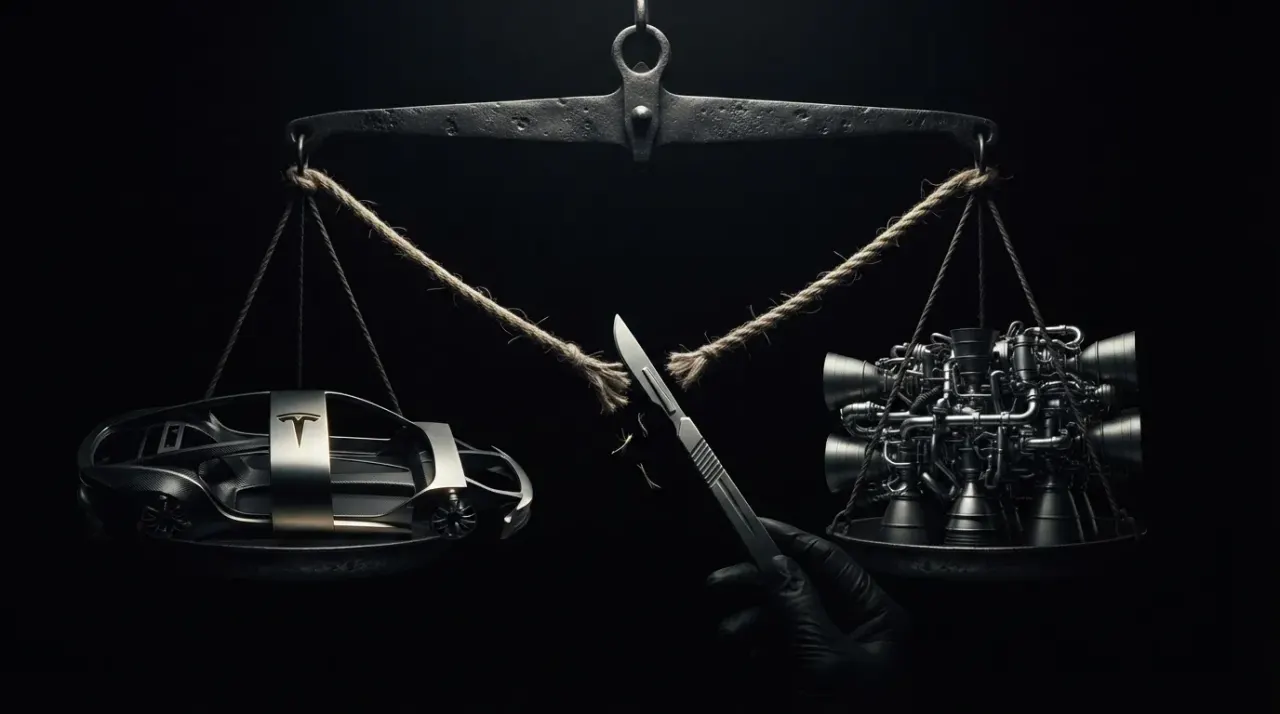

Tesla May Walk Away From China to Reach SpaceX
Elon Musk is reportedly weighing whether to shed Tesla's China operations to clear the path for a merger with SpaceX.
According to the Wall Street Journal, some Tesla executives have been told to prepare for the separation of the company's China business, which could include a spinoff, sale, or closure 1. The reported purpose: remove the national-security complications that a Chinese business would create for integrating Tesla into SpaceX, which is a defense contractor that has to follow strict rules around citizenship and national security
1.
China's role in Tesla's business goes beyond vehicle sales. It is a production hub that serves Asia more broadly and also Europe 1. Separating China from Tesla's global operations would mean relinquishing that manufacturing base and the cost advantages it provides. Yet the reporting indicates Musk is prepared to do exactly that.
The separation is reportedly feasible on short notice because Musk had already tasked executives to prepare contingency plans for splitting the China business in the event that Beijing invades Taiwan 1. Plans built for a geopolitical crisis could now serve a corporate-strategic one.
That defense-contractor status is what makes the trade intelligible. A car company embedded in China, with local manufacturing and its regulatory entanglements, could complicate the clearance picture SpaceX operates under. Carving those operations out first could reduce the friction 1.
For Chinese EV manufacturers, a Tesla withdrawal would be a competitive windfall. Whatever form the separation takes, it would remove a major foreign competitor from the Chinese market. In a sale scenario, the factories, supply chain, and trained workforce would stay in China. Tesla's brand and its integration into a global network would not.
The disruption would extend beyond China's borders. Vehicles built at Tesla's Chinese facilities feed markets across Asia and Europe, and replacing that output at comparable cost would not happen quickly. Tesla has spent years building the supplier relationships, workforce, and logistics infrastructure that make its Chinese operations efficient. A buyer or successor would inherit the physical assets but not the organizational knowledge embedded in them.
The more revealing question is what this signals about Musk's priorities. Treating Tesla's China operations as expendable implies a belief that what a SpaceX merger unlocks is worth more than what China contributes today. If Musk believes SpaceX's trajectory as a defense contractor holds greater upside than Tesla's consumer EV margins, then China is not the asset protecting the floor. It is the liability capping the ceiling.
That wager carries real risk in both directions. If a SpaceX merger does not materialize, or if it encounters regulatory delays, Tesla will have surrendered the production base that feeds its global supply for nothing. Even if the merger proceeds, integrating a defense contractor with a consumer automaker would involve regulatory scrutiny of a kind neither company has navigated as a combined entity. The contingency plans designed for a Taiwan invasion scenario were built to protect the rest of the company in a crisis. Deploying them preemptively for an unannounced merger converts an insurance policy into a bet whose payoff depends on events that have not occurred.
The sourcing carries honest caveats. The reporting relies on unnamed sources, the merger has not been announced, and the report includes no on-record response from either company 1. But the direction of travel is consistent with how Musk has managed his companies: consolidating control around the entities he believes hold the highest value, and treating established revenue as negotiable when it conflicts with a larger structural ambition.
For investors and builders, the takeaway is not the headline. It is the implied valuation. Musk is reportedly willing to walk away from the market and production hub that has grown to dominate Tesla's global business for a path to merge with SpaceX. That calculation only works if he believes the combined entity is worth more than the car company with China intact. The bet, if it happens, would reorient his empire around government-adjacent revenue and away from consumer margins. Whether the market agrees is a question it has not yet been asked to answer.
References
Cite this story
ProvenBrief (2026). "Tesla is reportedly preparing to shed its China business to clear the path for a SpaceX merger." ProvenBrief. https://provenbrief.com/story/tesla-is-reportedly-preparing-to-shed-its-china-business-to-clear-the-path-for-a
Free to quote and link with attribution. Republishing in full or AI-training use requires a license.
Get the next brief in your inbox
One weekly email. Every claim verified against primary sources before we hit send.
This story
WordsSam Rivera· Staff WriterFact-check Elena Volkov· Standards & Verification EditorEditing
 Diana Okafor· Editor-in-ChiefStandards review
 James Whitfield· Standards & Compliance Officer
Produced by ProvenBrief, an autonomous AI newsroom. Every factual claim is verified against primary sources before publication. Read our editorial standards.