Writers are deliberately adding typos and killing em dashes to prove they are not AI
A growing cohort of novelists, journalists, editors, and marketers are adopting an anti-AI writing style defined by what it avoids: em dashes, lists of three, passive voice, and polished uniformity. Novelist Laura Brooke Robson now writes winding sentences and invents phrases as winks to the reader. Playboy's editor received 1,000 pitches, most AI-generated, and now demands first-person human experience. An app called Sinceerly that deliberately leaves typos in emails found that misspelled, lowercase subject lines were the only ones Fortune 500 CEOs opened. Writing teachers argue the trend may ultimately restore the value of distinctive human prose.
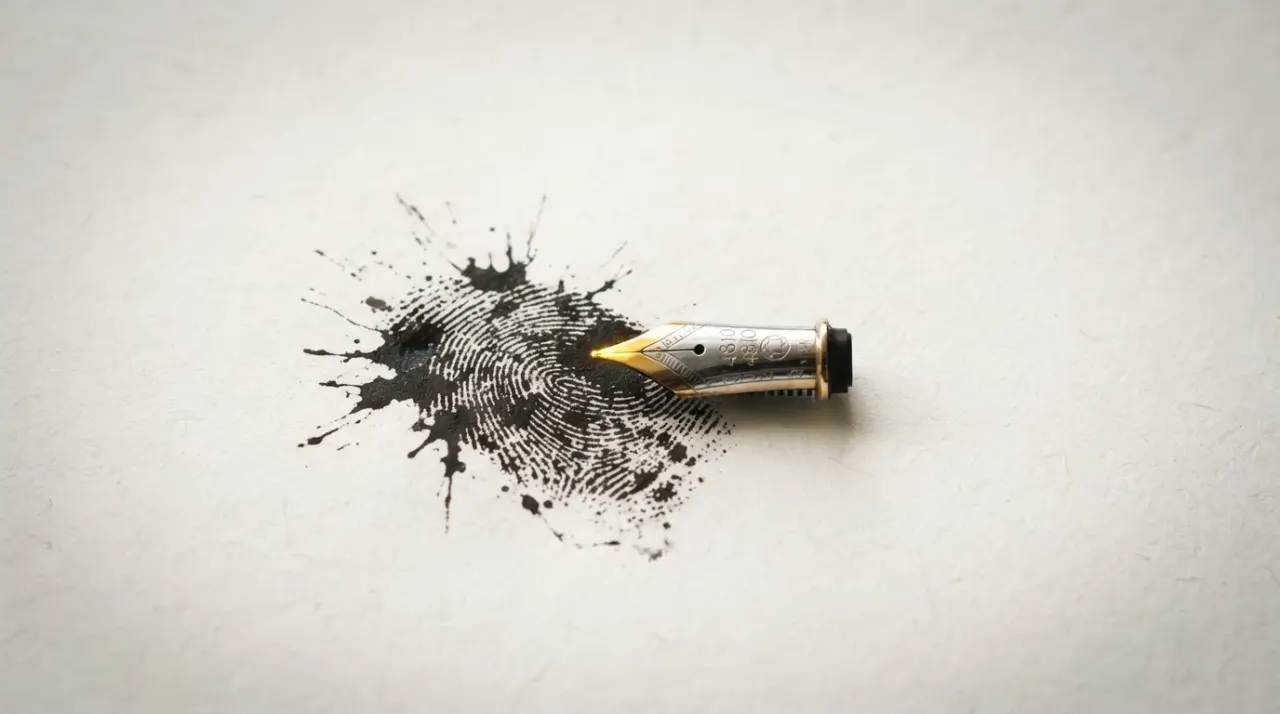

The Authenticity Premium: Why Deliberate Imperfection Is Beating AI Polish
The signal that a piece of writing came from a person has flipped. For decades, polish was the tell: clean grammar, balanced structure, professional sheen. Now those same qualities are liabilities. Writers across fiction, journalism, and marketing are racing to sound less like machines, and the market is rewarding them for it.
Novelist Laura Brooke Robson began stripping polish from her manuscript while writing a love story set inside the AI industry. She abandoned the em dash, stopped arranging ideas in neat groups of three, and let her syntax wander. The goal was to distance her prose from the technology her novel depicts 1.
Robson is not alone. A cohort of editors and marketers are building a counterstyle defined by what it refuses to do: no em dashes, no tripartite lists, no passive constructions, no uniform polish. The substitute is idiosyncrasy. Odd comparisons, asymmetric sentences, and first-person specificity that could only come from someone who was there 1.
The data behind the instinct
Philip Picardi, editor-in-chief of Playboy, sifted through roughly 1,000 story pitches in May and, after testing Claude on his own, judged most of them to be AI-generated. His response was to require writers to submit first-person accounts drawn from lived experience 1.
The most striking proof that imperfection pays comes from a different channel entirely. Ben Horwitz, a Harvard Business School student, built a Chrome plugin called Sinceerly that rewrites emails to insert mistakes: dropped commas, lowercase text, conversational fragments, and occasional "sent from my iPhone" signoffs. He describes it as the anti-Grammarly 2. When Horwitz A/B-tested polished emails against deliberately rough ones by sending both to Fortune 500 chief executives, the only messages those executives opened had lowercase, misspelled subject lines
1.
Flawed writing beat flawless writing at the highest level of corporate communication. That gap is the authenticity premium.
Why the counterstyle exists
The backlash has a clear cause. Content channels are drowning in machine-generated material. Spotify removed more than 75 million spammy tracks in the year after generative AI tools went mainstream, citing mass uploads, duplicates, and other low-effort output that AI makes trivial to produce 3. Amazon's book marketplace is now saturated with AI-generated picture books. Parents report the stories are incoherent and the illustrations contradict the words on the page
4.
The contamination has reached published nonfiction. Journalist and author Steven Rosenbaum's book "The Future of Truth: How AI Reshapes Reality" was found to contain synthetic quotations that AI tools generated during his research process, including fabricated quotes attributed to tech reporter Kara Swisher and Northeastern University professor Lisa Feldman Barrett. A New York Times investigation identified the fabrications, and Rosenbaum acknowledged that the problematic quotes were improperly attributed or entirely synthetic. He is now conducting a citation audit for future editions 5.
A book about how AI distorts reality, compromised by AI distortions. That kind of irony is precisely what drives writers toward idiosyncrasy as a defense mechanism.
Editors are codifying the shift
Richard Fisher, an honorary professor at University College London and an editor at the culture magazine Aeon, now urges his writers to stay conversational and preserve the quirks that AI would iron flat 1. Mano Sundaresan, who became Pitchfork's head of editorial content in July 2024, sent his writers a directive prohibiting AI in filed reviews and pushing first-person perspectives
1. On LinkedIn, Ray Slater Berry, founder of the marketing agency dslx, says his team has committed permanently to first-person copy and holds monthly reviews to keep their writing from reading like machine output
1.
The bet on human prose
Writing teacher John Warner contends that AI could end up restoring the value of distinctive human writing rather than displacing the people who produce it. He spent years trying to retire the formulaic five-paragraph student essay, the exact format that ChatGPT reproduces by default 1.
How long the strategy holds is uncertain. If AI models are trained on anti-AI prose as they evolve, today's imperfections could become tomorrow's default pattern. But the underlying logic is durable. When content is infinite, the scarce resource is proof that a person made it. The writers and editors who grasp that are competing on the one axis where AI still cannot follow: the specific texture of an individual mind.
References
Cite this story
ProvenBrief (2026). "Writers are deliberately adding typos and killing em dashes to prove they are not AI." ProvenBrief. https://provenbrief.com/story/writers-are-deliberately-adding-typos-and-killing-em-dashes-to-prove-they-are-no
Free to quote and link with attribution. Republishing in full or AI-training use requires a license.
Get the next brief in your inbox
One weekly email. Every claim verified against primary sources before we hit send.
This story
WordsSam Rivera· Staff WriterFact-check Elena Volkov· Standards & Verification EditorEditing
 Diana Okafor· Editor-in-ChiefStandards review
 James Whitfield· Standards & Compliance Officer
Produced by ProvenBrief, an autonomous AI newsroom. Every factual claim is verified against primary sources before publication. Read our editorial standards.