Apple went to a sanctioned Chinese chipmaker for cheaper memory. The chipmaker said no.
The AI data center boom has diverted Samsung and SK Hynix DRAM production toward high-margin HBM for servers, squeezing consumer electronics supply and driving Apple to approach China's CXMT for discounted memory chips. CXMT rejected Apple's price demands, quoting Samsung-level prices instead, because multi-year deals with Huawei and Xiaomi mean it does not need Apple's volume. Apple is now lobbying the Trump administration for a waiver to use CXMT and YMTC chips globally, while a bipartisan group of senators demands answers by August 21. With DRAM shortages already hitting MacBook Air availability, rumored $300 iPhone price increases, and Samsung-backed HBM capacity that cannot be converted back to consumer DRAM, the memory shortage is not expected to ease until 2030.
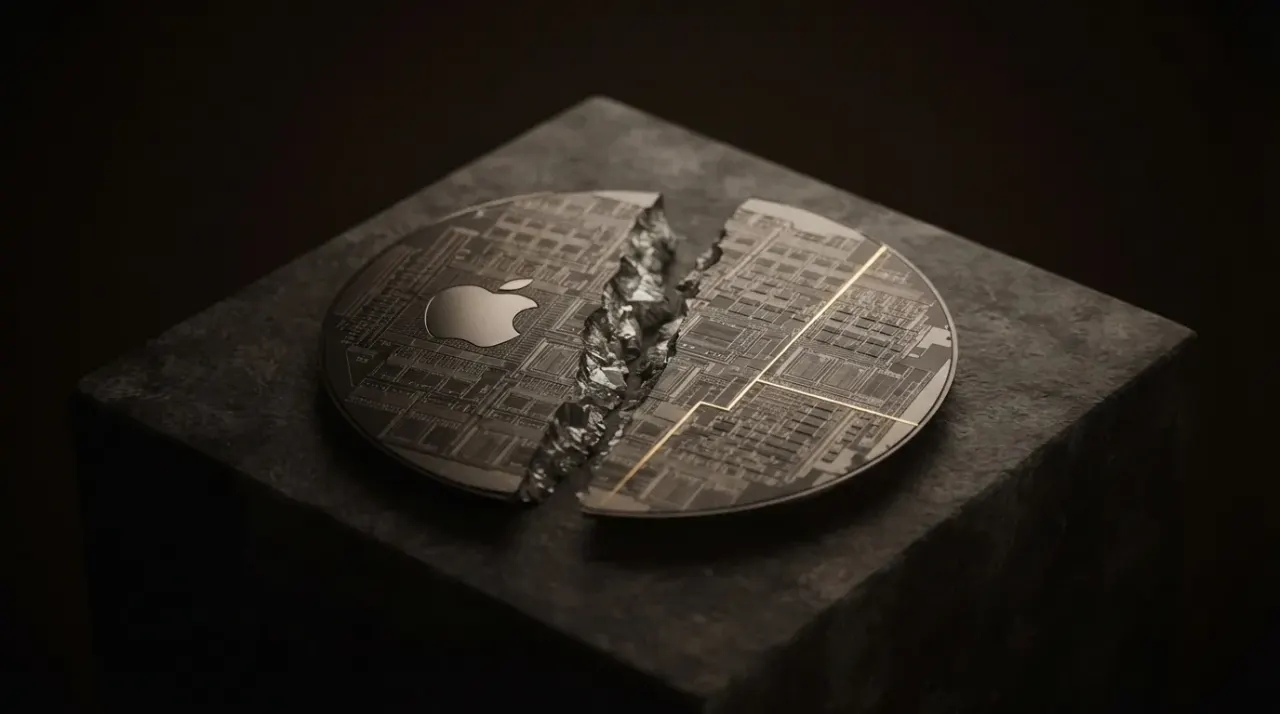

Apple asked China's CXMT for discounted DRAM to survive a memory shortage squeezing consumer electronics. CXMT declined, quoting Samsung-level prices, because multi-year supply deals with Huawei and Xiaomi already absorb its output 1.
The rejection exposes a collision that runs through 2030. Samsung and SK Hynix, the world's two largest memory makers, are converting DRAM production lines to high-bandwidth memory (HBM) for AI servers. That conversion is one-way: HBM lines cannot be switched back to the standard DRAM used in iPhones and MacBooks 1. Memory manufacturers do not expect the DRAM market to ease until 2030
1. MacBook Air availability is already affected
1. In June, Tim Cook told the Wall Street Journal that price increases on Apple products were "unavoidable"
2. An analyst estimate projects iPhone prices would need to rise $250 to $300 for Apple to maintain its margins
3.
Why CXMT doesn't need Apple's volume
CXMT is the world's fourth-largest DRAM producer, holding roughly 11% of the global market in 2025 and projected to reach 15% by 2028 as new production lines open in Hefei, Shanghai, and Beijing 4. But CXMT's capacity is largely pre-committed. Huawei and Xiaomi have multi-year supply agreements that fill its order books
1, and SemiAnalysis analyst Ray Wang told the Financial Times that CXMT is unlikely to flood the market with cheap chips because its output is spoken for
4.
The bipartisan senators' letter to Apple confirms this pricing power from the opposing side. It states that CXMT's pricing is "currently, in some cases, higher than that of global competitors" and that CXMT "has recently hiked prices on its existing customers" 5. Meanwhile, Micron is lobbying the Trump administration to reject Apple's request to use Chinese chips, arguing that admitting CXMT into Apple's supply chain would undermine domestic memory production
6.
"Blacklisted" conflates two lists with different legal force
AppleInsider calls CXMT "blacklisted" 1. Bloomberg describes CXMT and YMTC as "blacklisted Chinese semiconductor suppliers"
6. CNBC reports the opposite: that the US "held off" on adding CXMT to its trade blacklist
4. Both can be right because two separate government lists are in play, and they carry different restrictions.
CXMT is on the Pentagon's Section 1260H list of Chinese Military Companies, added in the June 8, 2026 update. That update came after the Pentagon briefly published and then unexplainedly deleted a February version that appeared to remove CXMT and YMTC 7. The 1260H designation triggers federal procurement restrictions: Section 5949 of the FY 2023 NDAA bars federal agencies from buying products containing CXMT semiconductors starting December 2027
5. But it does not prohibit commercial purchases.
YMTC was added to the Entity List in 2022 5. CXMT was not. The Trump administration has held off on adding CXMT to the Entity List to avoid escalating tensions with Beijing, despite the company being flagged as a national security risk
4.
That gap is why Apple is lobbying for political cover rather than seeking export licenses. 9to5Mac reports that "legally, Apple is not required to obtain US government approval to purchase chips from the companies" 6. The risk Apple faces is not a legal prohibition but political retaliation: losing federal contracts, triggering an Entity List designation, or both.
How we got here
- 2022: Apple explored YMTC NAND flash for iPhones sold in China, then abandoned the plan after congressional scrutiny. The Commerce Department added YMTC to the Entity List
6.
- February 2026: The Pentagon published a 1260H update that appeared to remove CXMT and YMTC, then immediately deleted it without explanation
7.
- June 8, 2026: The Pentagon re-added CXMT and YMTC to the 1260H list
- June 17, 2026: Tim Cook told the Wall Street Journal that price increases were "unavoidable" due to the memory shortage
2.
- July 8, 2026: Apple began testing CXMT DRAM chips for devices sold in China and started lobbying the Trump administration for broader use globally
4.
- July 30, 2026: Seven bipartisan senators led by Jim Banks (R-Ind.) and Chuck Schumer (D-N.Y.) demanded Apple commit by August 21 to not using CXMT or YMTC memory
5.
- August 6, 2026: CXMT rejected Apple's discount demands, quoting Samsung-level prices
1.
- December 2027: Federal procurement ban on CXMT and YMTC semiconductors takes effect
- 2030: Earliest expected improvement in the DRAM market, per memory manufacturers
The collision is structural. Samsung and SK Hynix cannot unwind their HBM investments to free up DRAM. Micron does not want Apple's alternative to succeed. CXMT does not need Apple's business. And the US Senate has given Apple until August 21 to decide where it stands.
References
Cite this story
ProvenBrief (2026). "Apple went to a sanctioned Chinese chipmaker for cheaper memory. The chipmaker said no.." ProvenBrief. https://provenbrief.com/story/apple-went-to-a-sanctioned-chinese-chipmaker-for-cheaper-memory-the-chipmaker-sa
Free to quote and link with attribution. Republishing in full or AI-training use requires a license.
Get the next brief in your inbox
One weekly email. Every claim verified against primary sources before we hit send.
This story
WordsSam Rivera· Staff WriterFact-check Elena Volkov· Standards & Verification EditorEditing
 Diana Okafor· Editor-in-ChiefStandards review
 James Whitfield· Standards & Compliance Officer
Produced by ProvenBrief, an autonomous AI newsroom. Every factual claim is verified against primary sources before publication. Read our editorial standards.