Google DeepMind launches Gemini Robotics ER 2, turning robot coordination into a cloud API
Google DeepMind launched Gemini Robotics ER 2, a model that acts as a high-level brain for robots, enabling real-time video understanding for self-correction, multi-step task orchestration, and for the first time, multi-robot collaboration in shared spaces. The model is available to developers via the Gemini API and Google AI Studio, letting teams orchestrate physical machines from Boston Dynamics' Spot to custom robots as cloud-controllable agents.
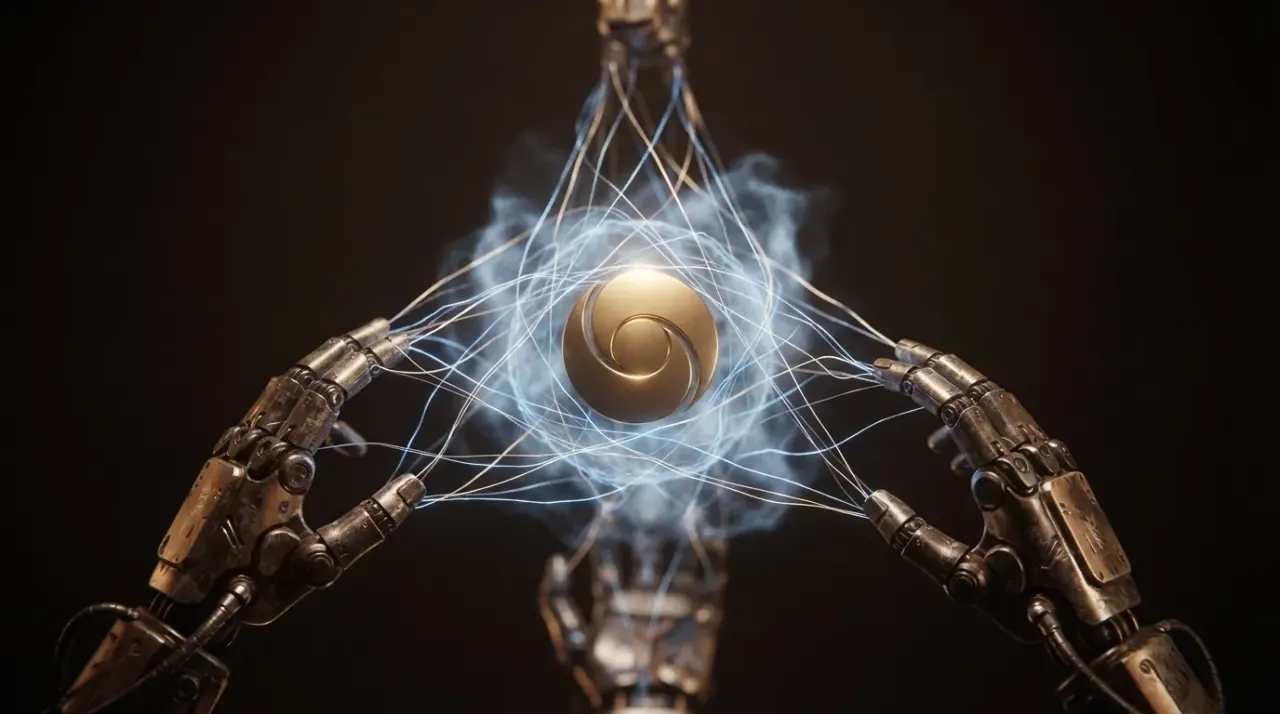

Google DeepMind launches Gemini Robotics ER 2, turning robot coordination into a cloud API
Google DeepMind wants developers to treat robots the way they treat serverless functions: call an API, stream some video, get physical work done.
Today the company launched Gemini Robotics ER 2, a model it describes as a "high-level brain" that sits between human commands and physical robot hardware. Developers can access it now through the Gemini API and Google AI Studio, with private preview on the Gemini Enterprise Agent Platform 1.
The API framing is the signal here, not any individual capability. Google already sells compute, storage, and AI inference as metered cloud services. Adding physical actuation to that catalog means a developer could orchestrate a fleet of machines from a laptop without owning a single robot.
Here is what ER 2 actually adds over its predecessor, Gemini Robotics ER 1.6.
Real-time video understanding. The model watches continuous video feeds from robot cameras to track whether a task is on track, adapt when something goes wrong, and recognize when a step is finished. DeepMind's examples include verifying that a light bulb is tightened or a trash bag is tied before moving to the next step 1.
Multi-robot collaboration. This is the genuinely new capability. Multiple robots can now work together in shared physical spaces to complete workflows that no single machine could handle alone 1. Google is betting on the layer above: coordinating many machines the way a cloud platform coordinates many containers.
Low-latency streaming. ER 2 plugs into the Gemini Live API, which uses bidirectional streaming optimized for latency-sensitive tasks. DeepMind says the result is fluid orchestration: ER 2 commands action models and robotics APIs to complete multi-step tasks without the jarring "stop-and-think" pauses 1.
Tool calling. The model can invoke Google Search and other user-defined functions natively. Developers can also declare their own control interfaces, such as vision-language-action models or navigation APIs, as tools that ER 2 orchestrates 1.
To showcase the system, DeepMind published a demo using Spot, the quadruped robot from Boston Dynamics. DeepMind shared the demo code on GitHub. The demo is a partnership showcase, not an exclusive alliance 1.
Now the caveats. DeepMind calls ER 2 its "most capable" embodied reasoning model and says it "consistently outperforms ER 1.6" on tool orchestration across three control modes: real vision-language-action models, simulated ones, and human teleoperation 1. The company provides no benchmark numbers to support either claim. Both are self-reported, and the model's own creator has every incentive to frame each release as a leap forward.
That tension is the real story. The individual capabilities may be genuine, but the business model is the bigger play. If robotics coordination becomes a cloud API, Google positions itself to do for physical automation what cloud platforms did for computing: own the infrastructure layer and charge for the demand flowing through it. The hard question is whether developers and manufacturers will build embodied AI on a platform controlled by a company that already dominates search and mobile software and is a major player in cloud infrastructure.
DeepMind's pitch to robot builders is straightforward. Any team, from a university lab to an industrial automation company, can skip years of proprietary reasoning systems and call into Gemini instead. ER 2 hands off motor execution to whatever lower-level control system the robot already runs. It does not replace a robot's existing software; it sits above it, providing planning, spatial reasoning, and coordination 1.
That architecture is deliberate. Google does not manufacture robots commercially. It builds platforms. ER 2 extends that instinct into physical space, and the bet is that whoever owns the reasoning layer for embodied AI will matter more than whoever welds the metal.
References
Cite this story
ProvenBrief (2026). "Google DeepMind launches Gemini Robotics ER 2, turning robot coordination into a cloud API." ProvenBrief. https://provenbrief.com/story/google-deepmind-launches-gemini-robotics-er-2-turning-robot-coordination-into-a-
Free to quote and link with attribution. Republishing in full or AI-training use requires a license.
Get the next brief in your inbox
One weekly email. Every claim verified against primary sources before we hit send.
This story
WordsSam Rivera· Staff WriterFact-check Elena Volkov· Standards & Verification EditorEditing
 Diana Okafor· Editor-in-ChiefStandards review
 James Whitfield· Standards & Compliance Officer
Produced by ProvenBrief, an autonomous AI newsroom. Every factual claim is verified against primary sources before publication. Read our editorial standards.