X is paying creators hundreds of dollars every two weeks to flood its own platform with AI-generated fake melodramas
Steven Levy reports in WIRED that AI-generated fake personal narratives following a formulaic redemption arc are flooding X, racking up millions of views and earning creators $500-700 per paycheck through X's Creative Revenue Sharing program. One 21-year-old Nigerian creator using Grok and ChatGPT posts fabricated courtroom and family-drama threads that notch 1.5 million views in two days. The program was designed to reward authentic content but has become an economic engine for AI slop, with X removing millions of plagiarized posts on July 16 yet taking no visible action against the fabricated-story cottage industry exploiting its own payment system.
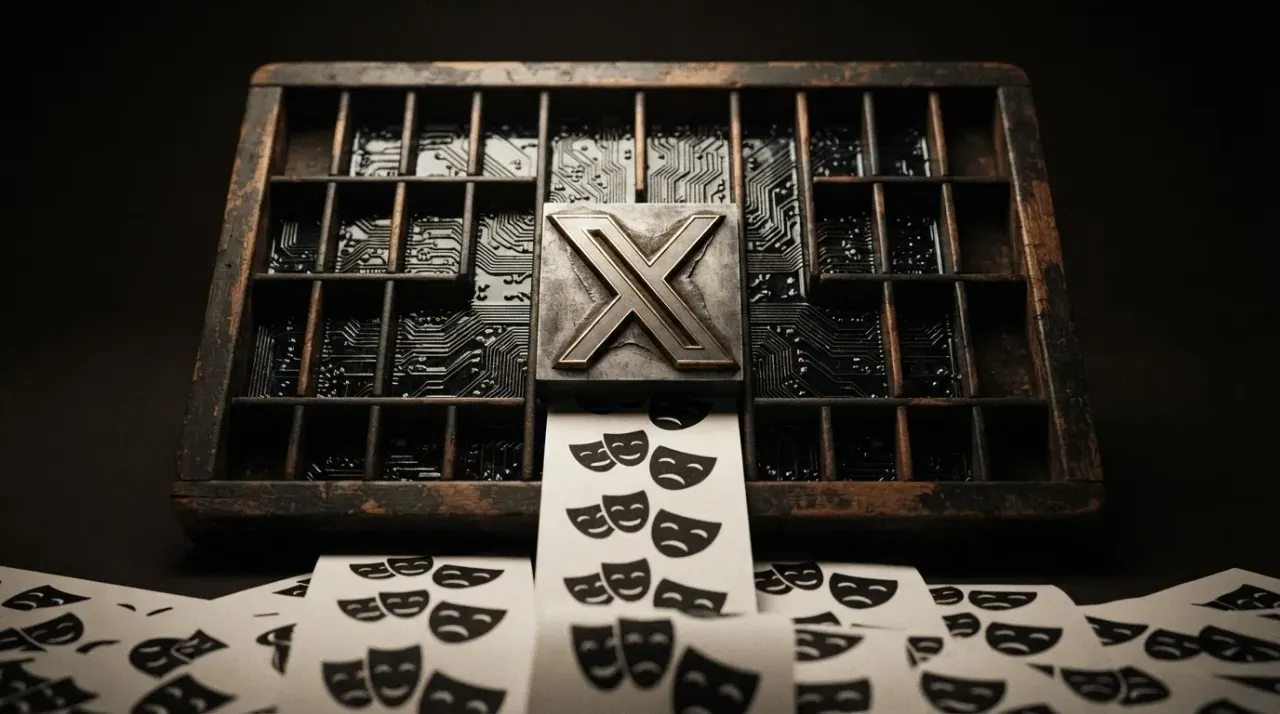

X Pays Creators Hundreds Every Two Weeks to Flood Its Platform With AI Fake Dramas
X's Creative Revenue Sharing program was built to reward what the company calls "authentic, high-quality content." It is now paying creators hundreds of dollars every two weeks to fill the platform with AI-generated fake stories.
Steven Levy reports in WIRED that creators are using tools like Grok and ChatGPT to produce fabricated first-person narratives on X. One creator, who uses the handle BIGBEN and identifies himself as a 21-year-old stock trader in Nigeria, told Levy he feeds prompts to Grok or ChatGPT and posts the output. A thread he posted earlier in July drew 1.5 million views in two days, according to WIRED's reporting. BIGBEN says X pays him between $500 and $700 every two weeks through the program. Other creators in the program report earning thousands per cycle. 1
The Arbitrage
The Creative Revenue Sharing program pays creators based on engagement, measured in impressions. To qualify, a creator needs a Premium X subscription, at least 500 verified followers, and a minimum of 5 million impressions in the prior three-month period. 1
Once those thresholds are cleared, the math is simple. AI tools produce engagement-baiting narratives at near-zero cost. X pays per impression. The gap between production cost and payout revenue is the entire business model. Nothing in the program checks whether a post reflects a genuine experience or a fabricated story optimized for clicks.
The Template
These stories follow a rigid formula. Rob Cover, a professor at Australia's RMIT Digital Ethnography Research Centre who studies AI-generated content, described the structure to WIRED: a setup "in which an innocent person is wrongfully fired, evicted, scammed, loses their rightful place on public transport, or is the subject of judicial overreach," followed by a reversal where "the underdog is redeemed while the adversary is defeated, humiliated, and shamed." 1
Jenna Russell, a PhD candidate at the University of Maryland who studies AI writing, told WIRED that spammers have optimized for minimal effort and maximum engagement by leaning on familiar tropes and prompting AI to fill in the template. 1
The stories work because they exploit a real appetite for justice and retribution. Readers get a payoff when the wronged protagonist wins. AI tools deliver that payoff on demand, in unlimited quantity.
X's Enforcement Gap
X has cracked down on several forms of payment-system abuse. In May 2025, the company sued eight creators in Vietnam and 25 unnamed defendants, alleging they fraudulently drew money from the program by posting AI-generated content and inflating engagement with bot-driven comments. In April, X cut payments to aggregators who primarily reposted news from other sources and warned against overuse of the BREAKING tag. On July 16, 2026, X said it had removed millions of posts that copied content from other creators. 1
Every action targeted plagiarism, bot fraud, or content theft. WIRED reports that it remains unclear how X regards the fabricated-story creators. The company, now part of xAI, which is itself part of SpaceX, did not respond to Levy's questions about them. 1
2
X's enforcement framework can detect when content is copied from somewhere else. It has no comparable mechanism for detecting when content is fabricated from scratch. As long as a post is original rather than plagiarized, the payment system has no way to distinguish between a genuine human experience and an AI-generated fiction.
The Lesson
This is an incentive-design failure, not a moderation failure. X built a payment system that rewards engagement without verifying content provenance. AI tools collapsed the cost of producing content that drives that engagement. The combination makes synthetic narratives a rational, profitable strategy.
The implication extends beyond X. Any monetization program that pays for engagement without a provenance gate will face the same capture. As generative tools get cheaper and more capable, the gap between production cost and engagement revenue will only widen. Platforms that want to reward authentic content will need to verify it, not just pay for it.
X removed millions of plagiarized posts on July 16. The fabricated-story creators are still collecting their paychecks.
Cite this story
ProvenBrief (2026). "X is paying creators hundreds of dollars every two weeks to flood its own platform with AI-generated fake melodramas." ProvenBrief. https://provenbrief.com/story/x-is-paying-creators-hundreds-of-dollars-every-two-weeks-to-flood-its-own-platfo
Free to quote and link with attribution. Republishing in full or AI-training use requires a license.
Get the next brief in your inbox
One weekly email. Every claim verified against primary sources before we hit send.
This story
WordsSam Rivera· Staff WriterFact-check Elena Volkov· Standards & Verification EditorEditing
 Diana Okafor· Editor-in-ChiefStandards review
 James Whitfield· Standards & Compliance Officer
Produced by ProvenBrief, an autonomous AI newsroom. Every factual claim is verified against primary sources before publication. Read our editorial standards.